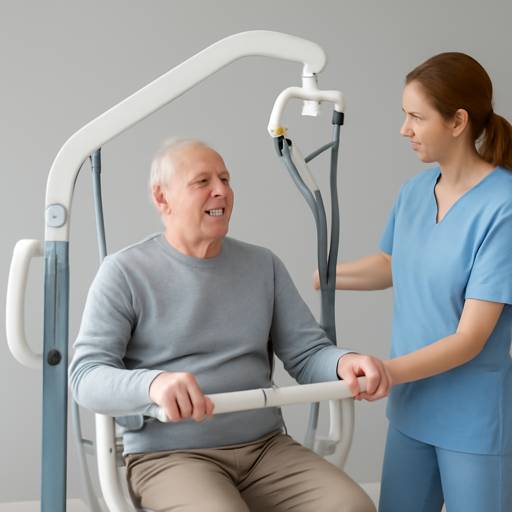
Patient handling in healthcare and home care environments presents persistent challenges. For individuals who retain some weight-bearing ability, the process of moving from a seated to a standing position is both a functional necessity and a therapeutic goal. Manual transfers create significant physical strain on caregivers and pose fall risks for patients. The mechanical solution to this complex problem is the sit to stand device. When searching for a sit to stand lift for sale, understanding the mechanics, safety protocols, and specific patient criteria is essential for making an informed investment. These devices are not merely lifting tools; they are rehabilitation aids that preserve dignity, encourage muscle engagement, and reduce the incidence of caregiver back injuries. The modern market offers a variety of models designed to accommodate different patient sizes, floor spaces, and clinical settings. This article provides an in-depth examination of what to look for, how these devices work, and why they represent a critical piece of equipment for any facility or home focused on safe patient handling.
Understanding the Clinical Benefits and Operational Mechanics
The fundamental purpose of a sit to stand lift is to assist a patient in transitioning from a seated surface to a standing position using their own lower body strength. Unlike a ceiling lift or a full-body sling lift, this device requires the patient to participate actively. The patient sits on a specialized sling or pad that is placed behind their back and under their buttocks. A knee pad stabilizes the legs, preventing the knees from buckling forward. As the lift arm raises, the patient is gently pulled into a standing posture. This action is critically important for maintaining and improving ambulation skills. For healthcare facilities, the investment in a high-quality lift directly correlates with reduced workers' compensation claims. Caregivers who manually lift patients are subject to forces that exceed safe ergonomic limits. The sit to stand device eliminates the need for awkward bending and twisting, replacing it with a smooth, mechanical motion controlled by a handset or foot pedal.
The operational mechanics vary between electric and manual models, though electric versions dominate the market due to their ease of use. A battery-powered actuator lifts the boom arm, providing a steady and controlled ascent. Many units feature a spreadable base that widens to provide stability during the transfer and narrows to maneuver through doorways. Weight capacity is a primary specification, with most standard models supporting patients up to 400 pounds, while bariatric versions extend to 700 pounds or more. The sling design is also a crucial consideration. Disposable or washable fabric slings with built-in leg straps offer different levels of support. For patients with hip contractures or those who cannot fully flex at the hips, a standard sling may be insufficient. In such cases, a full back sling or a vest-style sling provides better trunk control. When evaluating a sit to stand lift for sale, clinicians must assess the patient’s hip range of motion and ability to follow verbal commands. The device is contraindicated for patients who are completely non-weight-bearing or who have significant cognitive deficits that prevent them from holding onto the handles or cooperating with the transfer.
Beyond the mechanics, the ergonomic benefits extend to the patient’s psychological well-being. Being lifted flat in a sling can be disorienting and passively alienating. A sit to stand lift allows the patient to look forward, maintain eye contact with the caregiver, and control the pace of the transfer. This engagement is particularly valuable in geriatric rehabilitation and post-surgical recovery. Many facilities report that patients regain confidence faster when using these lifts because they are not completely removed from the process. The lift acts as a transitional tool, not a crutch. Caregivers also benefit from reduced fatigue, allowing them to provide higher quality care throughout their shifts. The integration of these lifts into a comprehensive safe patient handling program has been shown to decrease the incidence of fall-related injuries by over 40%. Therefore, the decision to purchase a sit to stand lift for sale should be viewed as a strategic investment in both staff safety and patient outcomes.
Key Features to Evaluate When Comparing Available Models
The marketplace for these devices is crowded, but distinguishing between a budget unit and a clinically reliable tool requires a clear understanding of essential features. The first factor to examine is the base design and steering mechanism. A robust, heavy-duty chassis with large, non-marking casters ensures stability and smooth rolling over carpet or tile. Motorized steering is available on high-end models, but for most applications, a push handle with ergonomic grips suffices. Look for lifts that offer a quick-release sling bar that allows the caregiver to attach or detach the patient without tools or excessive bending. This feature reduces cycle time and prevents caregiver strain during the setup process. The sling bar itself should have multiple attachment loops to accommodate different patient heights and leg lengths.
Battery management is another critical specification. Units with a digital battery indicator prevent unexpected power failures during a transfer. Emergency lowering functions, either manual or battery backup, are non-negotiable safety features. In the event of a power loss, the caregiver must be able to safely lower the patient to a seated position. The control pendant should be intuitive, with clearly labeled buttons for up, down, and emergency stop. Some advanced models include load cells that weigh the patient during the transfer. This is a valuable feature for facilities that need to monitor patient weight regularly without a separate scale. The knee pad must be padded and adjustable for both height and depth. A poorly fitting knee pad can cause discomfort or allow the patient’s knees to slip out during the lift. Look for knee pads that are removable for cleaning and covered with antimicrobial material to reduce infection risk.
When searching for a sit to stand lift for sale, the warranty and service support should also influence the decision. Reputable manufacturers offer at least a two-year warranty on the frame and a one-year warranty on electrical components. The availability of replacement parts, such as slings and batteries, directly impacts the longevity of the device. Slings are consumable items that need regular replacement due to wear and hygiene requirements. A unit with proprietary slings may lock you into a more expensive supply chain. Therefore, selecting a lift that uses standard, widely available slings can reduce long-term operational costs. In a case study involving a 150-bed skilled nursing facility, transitioning from a manual transfer protocol to a fleet of sit to stand lifts reduced staff injury claims by 61% within the first year. The facility chose models with hydraulic lowering capability for safety and a low base height, allowing the lift to slide easily under standard chairs and hospital beds. This example underscores that the design details of the lift matter as much as its lifting capacity. A comprehensive evaluation of these features ensures that the chosen equipment will serve its purpose effectively for years.
Real-World Applications and Facility Integration Strategies
The effective use of a sit to stand lift goes beyond simply placing the equipment in a room. It requires a well-planned integration into the daily workflow of the care environment. Consider a rehabilitation unit that specializes in post-hip replacement surgery. Patients in this setting are often restricted from crossing their legs or bending past 90 degrees at the hip. A standard sit to stand lift, used correctly, respects these precautions by providing a straight vertical lift. Physical therapists can use the lift as a gait training tool, walking the patient forward while the lift provides partial weight support. This approach reduces the therapist's physical load and extends the duration of therapy sessions. In this context, the lift is not just for transfers but is an active component of the rehabilitation process. Data from a study published in the Journal of Occupational Medicine showed that physical therapists using a sit to stand lift were able to provide 50% more assisted standing repetitions per session compared to manual assistance alone, leading to faster discharge times.
Another critical application is in memory care units. Patients with dementia may become fearful or combative during passive transfers. The sit to stand lift allows the caregiver to approach the patient from the front, speak calmly, and guide the patient into the sling. The patient feels more in control because they can see the movement and participate. This reduces agitation and the need for sedation. A case study from a memory care facility in the Midwest documented that after implementing a sit to stand program, incidents of patient aggression during transfers dropped by 35%. The key was caregiver training; staff learned to use a calm, two-step communication process: first, explain the movement, and second, initiate the lift. This example demonstrates that the equipment is only as effective as the people using it. Therefore, when purchasing a sit to stand lift for sale, facilities should budget for comprehensive training sessions. This training should cover not only the mechanics of the device but also patient assessment, sling selection, and emergency procedures.
For home care environments, space is often a limiting factor. Smaller, lighter models with folding frames are ideal for caregivers who need to store the lift in a closet or transport it between rooms. The portability of the unit becomes a primary concern. Home users should look for lifts that can be disassembled without tools or that have a quick-release frame. Battery life is also more critical in the home, where outlets may not be conveniently located near the bed or chair. In a real-world scenario, a family caregiver found that a portable sit to stand lift allowed her husband, who was recovering from a stroke, to transfer from the living room sofa to his wheelchair multiple times a day without exhausting the caregiver’s back. The lift’s low profile base allowed it to fit under the sofa, and the padded knee support prevented him from sliding forward. This application highlights the versatility of the device outside of institutional settings. Whether in a bustling hospital or a private residence, the sit to stand lift remains a pivotal tool for maintaining mobility and safety. The decision to purchase one should be driven by a thorough assessment of the specific patient population and the physical layout of the environment.