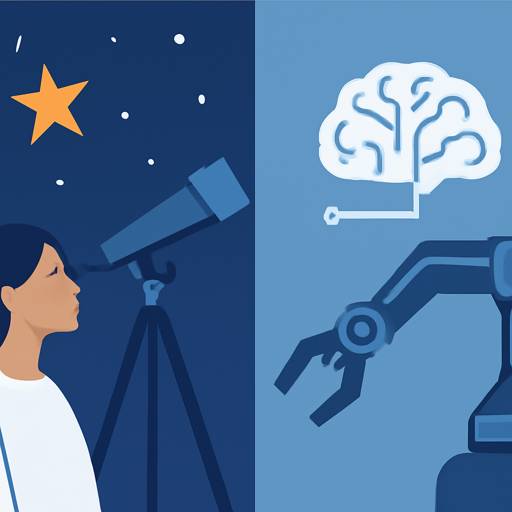
The most exciting frontiers of learning live where curiosity meets creation. Whether charting variable stars, mapping attention in the brain, or coordinating fleets of tiny robots, students can turn questions into discoveries with projects that scale from a single laptop to collaborative, multi-school efforts. This guide spotlights actionable projects, credible data sources, and design blueprints across astronomy research ideas, cognitive science for high school experiments, and hands-on builds in humanoid robotics for students and swarm systems.
Guided by the Cosmos: Practical Astronomy Research Ideas and Space Telescope Projects
Exploring the universe begins with a focused question and reproducible measurements. A classic path starts with variable star photometry: use a DSLR or entry-level CCD with a small telescope to capture nightly images of a known variable star, then compute relative brightness by comparing to reference stars. Over weeks, students extract light curves, estimate periods, and discuss physical drivers such as pulsation or eclipsing companions. The learning arc spans calibration (dark, bias, flat frames), aperture photometry, error bars, and peer comparison via databases like AAVSO.
Exoplanet transit timing is another cornerstone. By plotting the subtle dip in brightness as a planet crosses its host star, students can validate published ephemerides and contribute to long-term monitoring. The workflow covers planning with planet databases, choosing exposure times to avoid saturation, and using Python libraries such as astropy and lightkurve to clean and model signals. Even without personal equipment, learners can mine open archives—MAST for Hubble and TESS data—to test hypotheses about periodicity, starspot modulation, or systematics in photometric pipelines. These are rich, authentic astronomy research ideas that teach statistics, coding, and scientific writing.
Entry-level spectroscopy turns color into chemistry. A simple slit-and-grating add-on for a smartphone or a low-cost spectrometer lets students record stellar spectra to identify absorption lines and infer temperature classes. They can compare spectra across stars, track changes in a bright emission source, or validate calibration with known lamps. For students drawn to solar system dynamics, asteroid light curves provide rotation periods and shape clues; cometary comas invite dust/gas analysis and photometric evolution over perihelion approaches.
Remote access and citizen science expand reach. Programs like Skynet or iTelescope schedule observations on professional instruments, while projects on Zooniverse or NASA Exoplanet Watch allow data labeling and tertiary analysis with immediate scientific value. For learners aspiring to professional-grade Space Telescope Projects, HST and JWST public datasets enable studies of star-forming regions, galaxy morphology, or nebular emission ratios using Jupyter notebooks. Best practices include preregistering hypotheses, maintaining a lab log, citing data sources, and using reproducible notebooks. A compelling capstone blends observation with modeling—for example, simulating transit light curves under different limb-darkening assumptions, then evaluating fit to real data. Students emerge with publishable figures, code repositories, and the confidence to communicate findings at science fairs or local astronomy clubs.
Minds in the Making: Cognitive Science for High School Experiments That Matter
Designing experiments that reveal how the brain thinks requires careful scaffolding but modest equipment. Start with a phenomenon, define a measurable outcome, and control confounds. The Stroop task remains a staple: measure reaction times when color words match or conflict with font color to demonstrate interference. With jsPsych or PsychoPy, students can code a controlled protocol; with spreadsheets or Python/pandas, they analyze mean differences, effect sizes, and individual variability. Pairing the task with a brief attention-demanding activity allows exploration of fatigue or practice effects.
Working memory challenges such as the n-back or digit span tasks probe capacity limits and strategies. Students can manipulate stimuli modality (auditory versus visual) or inter-stimulus interval to test load-dependent performance. Another powerful demonstration is change blindness: present two alternating images with a brief blank screen and measure detection rates. Discussions naturally surface attentional bottlenecks, feature integration, and top-down expectation. For perception, illusions like the Müller-Lyer or brightness contrast illusions enable hypothesis-driven testing about context and bias, while signal detection theory (hit/miss/false alarm) frames analysis with nuance.
Ethics is non-negotiable. Even in cognitive science for high school settings, informed consent, anonymization, voluntary withdrawal, and debriefing are essential. Students should avoid sensitive topics, secure approvals from school oversight, and store data responsibly. They can rehearse IRB-style writeups: research question, risk assessment, and participant rights. To strengthen rigor, teach counterbalancing, randomization, and pre-registration of analysis plans to minimize HARKing (hypothesizing after results are known). Small sample sizes are fine if students report limitations and confidence intervals instead of overclaiming significance.
Real-world replication deepens impact. The serial position effect—better recall for first and last items in a list—can be replicated in a classroom with randomized word lists and timed recall, then extended by manipulating rehearsal time or list length. A sleep and memory variant invites students to compare evening and morning performance while cautioning about uncontrolled variables. For a capstone, combine behavior with low-cost physiology: use a heart-rate sensor to correlate arousal with performance in a simple vigilance task. The result is a portfolio of experiments that teach design logic, data literacy, and ethical practice, preparing students to read journal articles critically and contribute to open science repositories.
From Humanoid Motions to Swarm Intelligence: Robotics Projects Students Can Build and Study
Robotics becomes transformative when code meets embodiment. In humanoid robotics for students, start with a 6–10 DOF biped that uses hobby servos, an IMU, and a microcontroller (Arduino or Raspberry Pi). Students learn servo calibration, link lengths, and basic kinematics by posing the robot for standing, sitting, and waving motions. Gait generation follows: begin with quasi-static walking using center-of-mass shifting and zero-velocity phases, then introduce simple feedback from the IMU to correct pitch/roll. Footstep planning on a grid mat reveals trade-offs among step length, stability margins, and power draw. A safety-first debug routine—kneel, freeze, relax servos—prevents damage and teaches professional habits.
Control architectures matter. A finite-state machine can manage behaviors (idle, step-left, step-right, recover), while PID loops stabilize torso angles. Students can prototype inverse kinematics in a browser notebook, then deploy trajectories to the robot, comparing simulated joint limits to real mechanical constraints. Sensors add richness: toe switches detect contact, ultrasonic sensors avoid obstacles, and a camera enables line-following or AprilTag localization. For an intermediate challenge, map joystick inputs to target footprints, then let the robot auto-generate the joint sequence. The documentation outcome—a datasheet describing torque requirements, battery management, and duty cycles—builds engineering communication skills.
Swarms shift focus from single-agent prowess to emergent teamwork. A fleet of palm-sized rovers with IR or Bluetooth radios lets students implement flocking (Boids), dispersion, and rendezvous. Consensus algorithms (e.g., majority vote on where to explore) contrast centralized vs. decentralized control. A gymnasium floor can stand in for a search-and-rescue arena: robots broadcast “found” tokens, relay messages through neighbors, and maintain connectivity while avoiding collisions. Simulation tools like Webots or CoppeliaSim allow rapid iteration before field trials, and log files help replay and diagnose failures. For inspiration, browse Swarm robotics student projects that translate algorithms into classroom-tested builds and assessment rubrics.
A strong swarm curriculum emphasizes robustness. Students test how many robots can fail before the mission collapses, injecting noise into sensors and dropouts into communication. Energy budgeting—sleep cycles, duty scheduling—introduces resource-aware autonomy. For vision-enabled swarms, color beacons or fiducial tags simplify perception; for GPS-denied indoor spaces, odometry and inter-robot ranging support relative localization. Cross-pollination with AI lets students deploy simple reinforcement learners for area coverage or path planning in a grid world, then transfer policies to hardware with safety constraints. Finally, capstones blend domains: a humanoid acts as a “base station” that receives samples from a swarm, or students mirror celestial dynamics by programming robots to maintain stable “orbits” around a moving point mass analog, uniting conceptual threads from astronomy, cognition, and robotics into one coherent, high-impact STEM narrative.